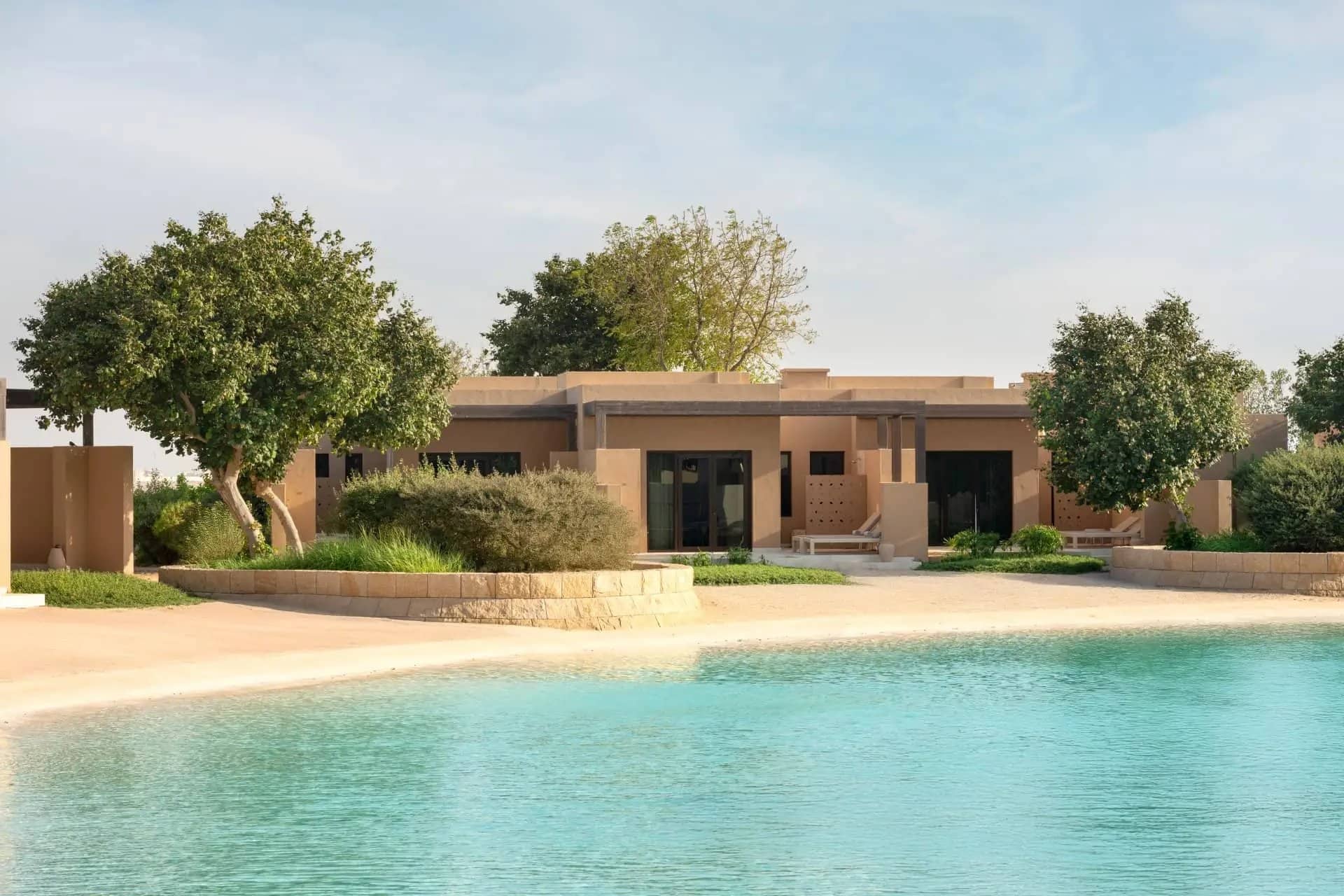
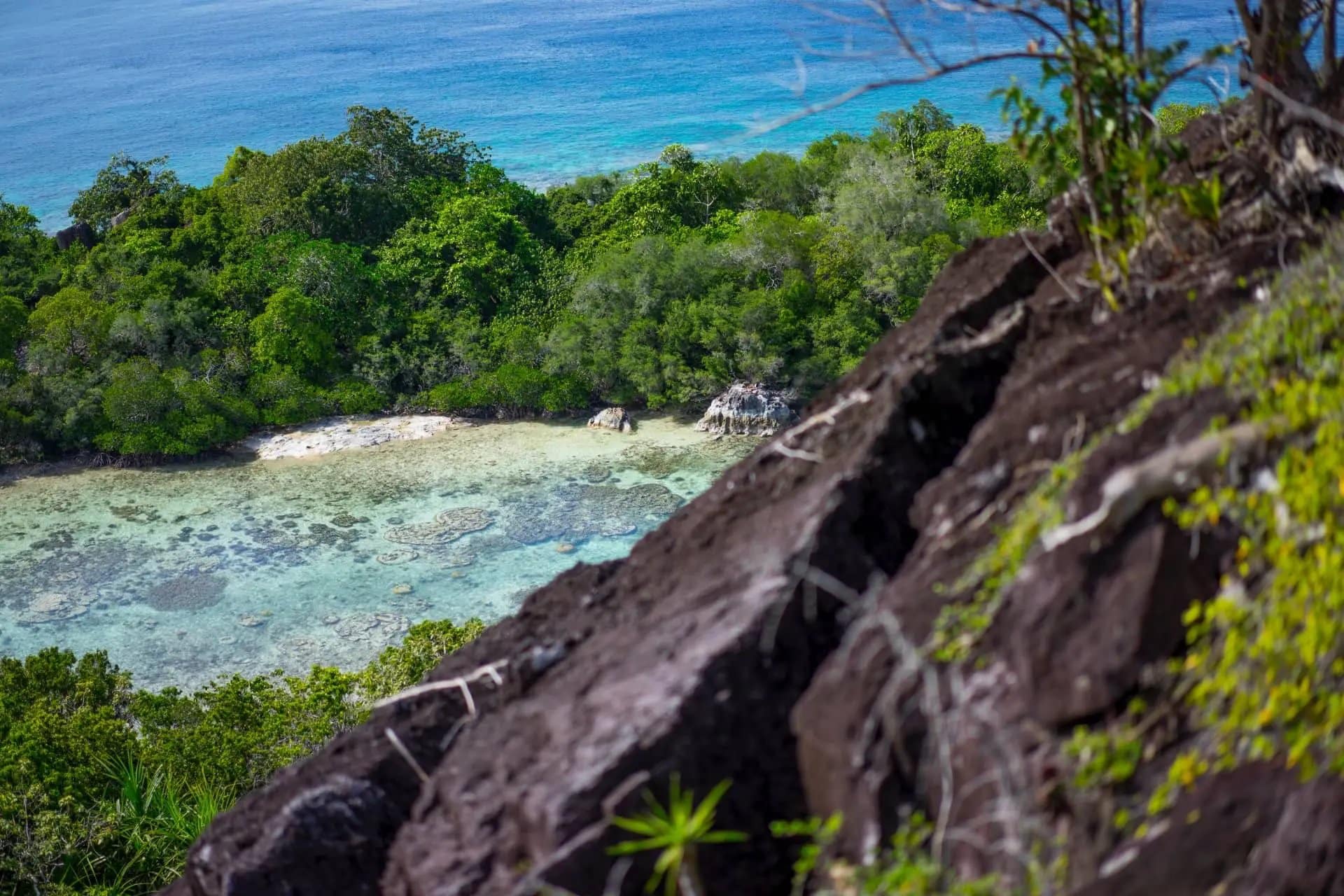
Dolomite and granite mountains, dry rivers and green drainage lines shape Namibia’s Hobatere Roadside Concession, on the western boundary of Etosha National Park. Wilderness Namibia says its new eight-suite camp, Wilderness Etosha, will open here in June 2027, with a pool set into the rocks and a viewing deck overlooking a waterhole.
Hobatere sits within a roughly 55,000-square-kilometre conservation bridge linking Etosha and Skeleton Coast national parks through a landscape that includes 14 communal conservancies. For travellers, the attraction is a small camp with private-concession access, walking safaris and two very different wildlife hides. Its setting also introduces a less familiar side of Namibia: highland elephants that climb steep slopes for favoured trees and visit waterholes after dark.

Eight suites among the rocks
Wilderness Etosha’s eight raised canvas suites will each have an air-conditioned twin bedroom with stackable glass doors, plus separate indoor and outdoor lounges. That combination should suit guests who want a close connection to the landscape alongside the comfort of an enclosed, cooled room between outings.
An enclosed restaurant will sit alongside an open-sided lounge and bar. The viewing deck is planned just 60–65 metres from a waterhole, giving guests a place to watch for animals coming to drink without leaving camp. A boma and the pool set into the rocks will provide further places to spend time between activities.
In-room spa treatments will also be available. With so few suites and several places to settle, the camp’s plans allow for afternoons divided between the pool, the waterhole and a treatment in the privacy of your room. The emphasis on slower exploration extends to time at camp, where watching a waterhole can be an activity in itself.
Two hides and a quieter side of Etosha
Guided walks and drives will explore Hobatere, with itineraries shaped around guests’ interests. Wilderness says it will have exclusive traversing rights across the private concession, including access roads closed to other visitors. Guides will also lead after-dark drives on the concession.
The concession’s private sunken hide will bring guests down to water level for wildlife watching and photography. Inside Etosha National Park, a second, above-ground hide called Miernes, or “Ant’s Nest”, will offer exclusive use at a private waterhole. The distinction matters when planning a stay: one hide is on Hobatere, while the other provides a separate vantage point within the park.
Wilderness also plans access to an approximately 38km loop in western Etosha that will be closed to self-drivers and other lodges. Together, these arrangements offer several ways to explore beyond the camp, with walking and night activities confined to the concession.
The operator’s preliminary camera-trap survey recorded 26 mammal species on Hobatere. They include Hartmann’s mountain zebra, giraffe, lion, leopard, cheetah, spotted and brown hyena, as well as aardwolf, caracal and honey badger. Those records give a sense of the concession’s wildlife, although an itinerary will depend on what guides and guests find on the day.
The elephants that climb mountains
Highland elephants seek out African star chestnut and Commiphora on steep, spring-fed slopes. Wilderness describes them drinking at remote waterholes under cover of darkness before retreating into the mountains by dawn. Encounters are never guaranteed, and their elusive behaviour is central to the safari being planned here.
“The focus here shifts from abundant sightings to meaningful discovery: reading the land and understanding how life adapts and survives at the edge of the arid savanna,” said Alex Henderson, managing director of Wilderness Namibia.
Community knowledge has helped researchers understand that behaviour. Conservation Namibia reports that researchers interviewed 34 community game guards across six conservancies, then combined those accounts with field walks. They found browsed trees high on slopes and cliff tops. The guards’ observations predate the recent published research, giving local experience an important place in the story guests will encounter.
The wider Kunene elephant population also demonstrates the importance of land beyond national park boundaries. A 2022 study in Ecology and Evolution analysed GPS records from 27 elephants tracked for roughly two years from December 2010. The researchers estimated that only 3.5% of the elephants’ space use was within the two national parks, Etosha and Skeleton Coast, while about 85% was within protected areas overall, principally communal conservancies.
NASA Earth Observatory describes a separate 2024 study that found three routes linking Etosha with protected lands in Kunene using eight years of tracking data. Movement between those areas was uncommon among the tracked animals.
Wilderness plans to share continuing fieldwork through maps, field notes and conversations about elephant movement and corridor ecology. When researchers are in camp, guests may have opportunities to speak with them directly, adding another dimension to what they see on walks and drives.
Community work beyond the camp
Communal conservancies help keep this wider landscape connected. Namibia’s conservancies are governed by elected community committees, with responsibilities including land-use planning and employing game guards who record sightings and incidents such as damage to water points.
Wilderness says the camp will recruit from neighbouring Ehi-Rovipuka Conservancy. Through the conservancy, Children in the Wilderness is working with Otjetjekua Primary School’s Eco-Club on a garden intended to provide extra support for the government feeding scheme. The Women for Conservation group is sewing uniforms for field guides and will help establish a beekeeping project within the concession.
The regional conservation programme predates the camp. Legacy Landscapes Fund has committed US$1 million annually for at least 50 years to the wider bridge landscape, with WWF and Integrated Rural Development and Nature Conservation implementing work in support of Namibia’s Ministry of Environment, Forestry and Tourism. Its programme includes securing wildlife corridors, monitoring biodiversity and developing local income sources.
Planning a 2027 stay
Wilderness Etosha is scheduled to open in June 2027. Rhino Africa lists starting rates of US$1,445 per person per night for 1 June–31 October 2027, falling to US$1,024 for 1 November–19 December. Its listed starting rate for 20 December 2027–5 January 2028 is US$1,627 per person per night.
Families should factor vehicle arrangements into their budget. Viatu lists a minimum guest age of six and says families travelling with children aged 12 or younger must book a private vehicle; this is subject to availability and costs extra. Some activities have separate age limits. For enquiries, contact Wilderness directly.
A longer Namibia itinerary could pair Hobatere’s mountains and waterholes with Wilderness Serra Cafema on the Kunene River. The eight-suite camp lies in the Marienfluss Conservancy, offering a contrasting river setting farther north-west.