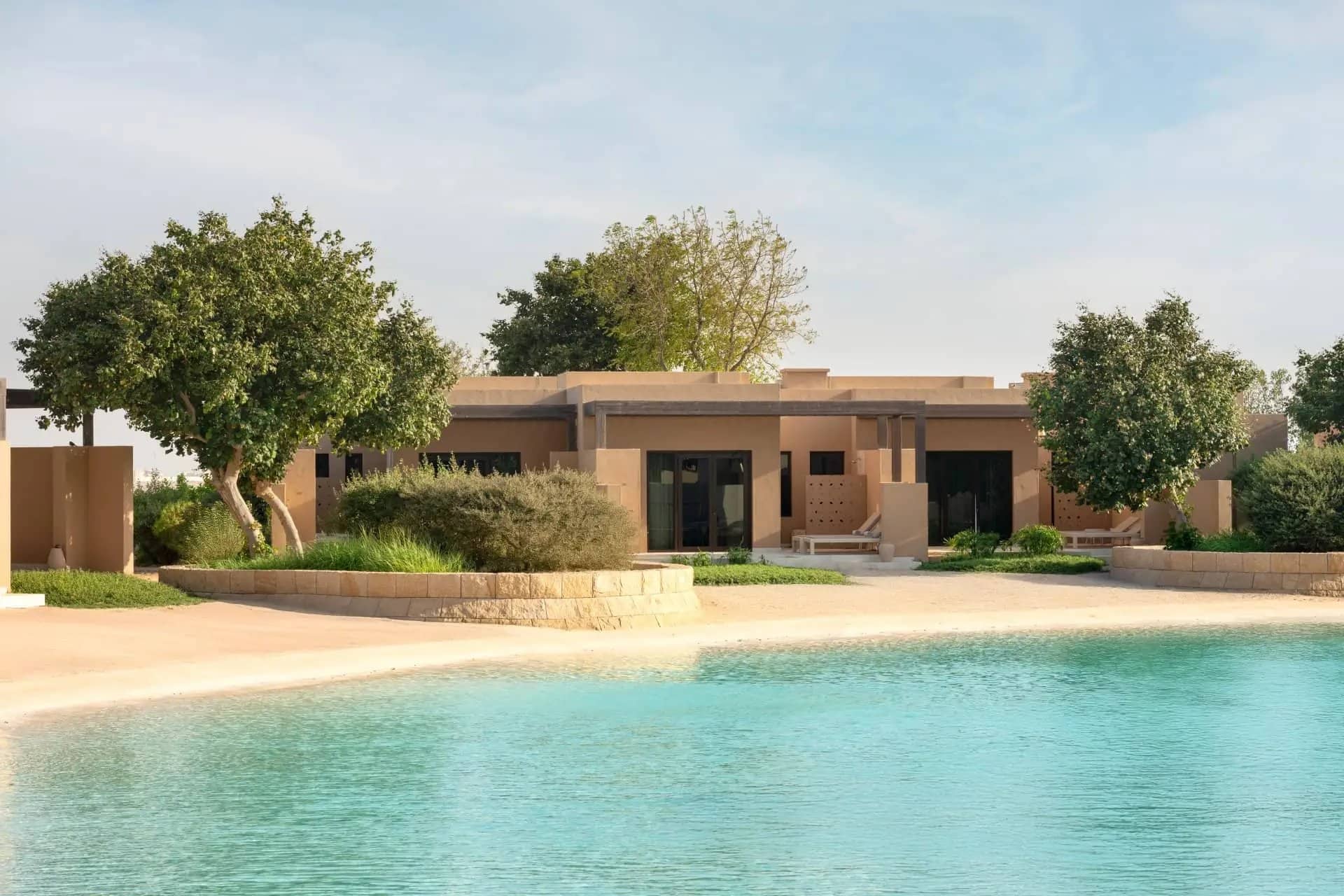
A seaplane lands in the lagoon at Bawah Reserve, a retreat spread across six islands in Indonesia’s Anambas Archipelago. Thirteen beaches, three turquoise lagoons and 100 hectares of primary rainforest form the setting for its 36 suites, bungalows and villas, with bamboo buildings and interiors furnished with pieces made from fallen trees.
Bawah has gained B Corp certification with an overall assessment score of 84.4. B Lab dates its certification to October 2026, with the resort announcing the news in November. The assessment covers environment, workers, governance, community and customers; environment was Bawah’s highest-scoring category.
The resort says the recognition reflects conservation and community work that began before it welcomed its first guests. For travellers, that work is visible in the buildings, the reef restoration programmes and opportunities to spend part of a stay alongside the conservation team.
Bamboo buildings and a lighter footprint
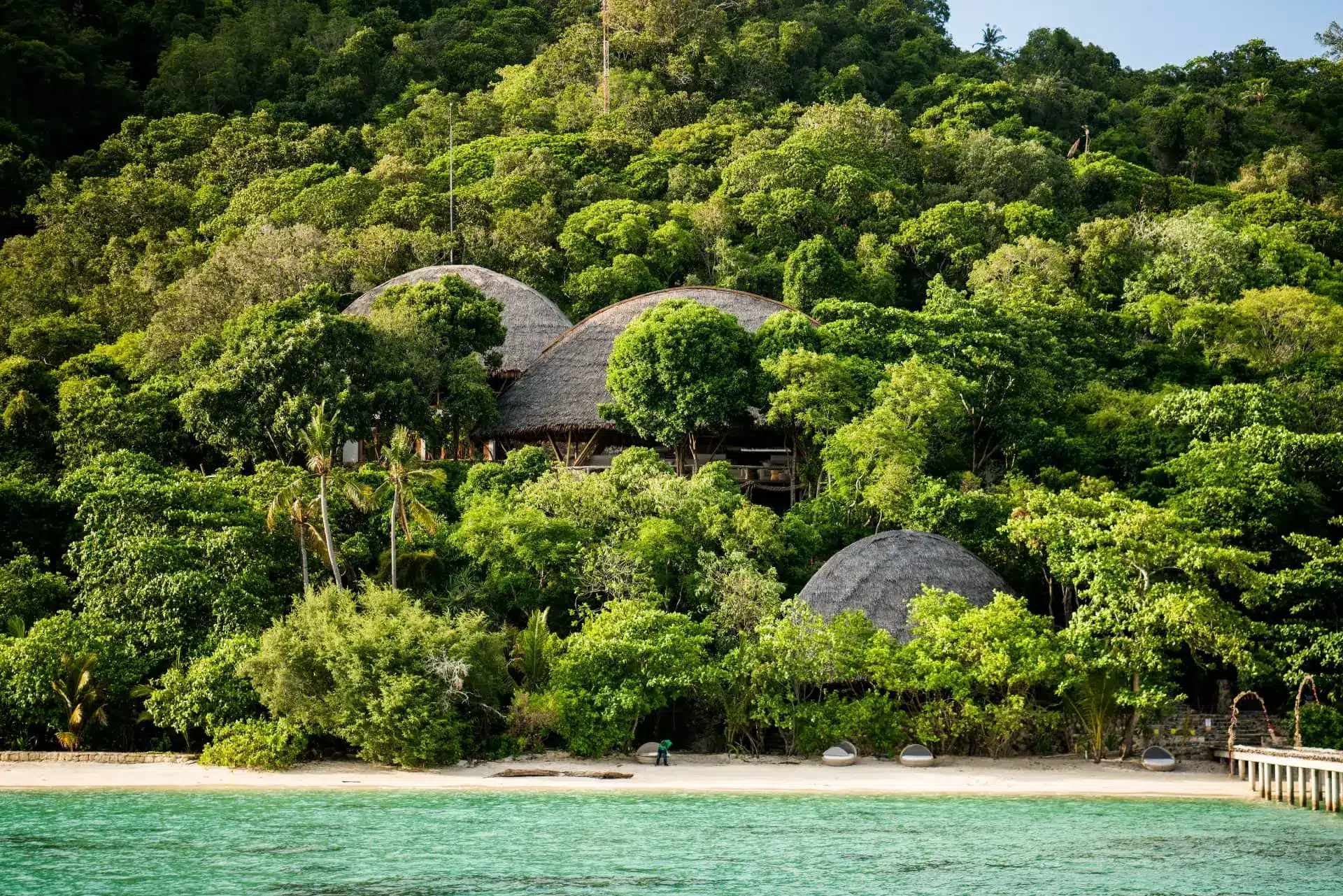
Singaporean architect Sim Boon Yang designed Bawah’s accommodation around existing trees and marine life. The resort was built without heavy machinery, with shoreline clearing kept to a minimum and care taken to protect the reef. Building materials included driftwood, teak, bamboo and recycled copper. Local Anambas stone forms paths, stairs and foundations.
His architecture practice, eco.id, describes the uphill structure housing the public facilities as supported at four points to limit earthworks on the slopes. Bamboo for the tented structures was grown in Java, prefabricated and shipped to the island for assembly.
Woven natural-fibre lights and tables made from fallen trees bring those materials into the interiors. Guests can choose between tented suites, pool villas and overwater bungalows, with different settings available within the reserve. Guided architecture walks are among the included activities, giving guests a way to learn more about the design during their stay.
Solar power on the water
Eighteen floating solar platforms help power Bawah. Installation specialist Swimsol describes a solar–diesel hybrid system with battery storage, using both floating and rooftop panels. During daylight hours, solar is the resort’s main source of electricity, according to Swimsol.
The island operates without single-use plastic, and guests receive refillable water bottles to use during their stay and take home. Waste from the resort and neighbouring islands is separated into 36 categories for recycling and upcycling, while weekly beach clean-ups offer a straightforward way for guests to help remove debris from the shores.
Restoring reefs and protecting turtles
John Nolan, Bawah’s head of marine conservation, leads work spanning coral restoration, reef-health monitoring, debris removal and turtle conservation. The coral nursery’s capacity has increased from 250 to 2,500 fragments. To date, 14,000 fragments have been transplanted onto artificial reef structures, restoring more than 1,650 square metres of degraded reef.
The team also documents coral spawning and controls crown-of-thorns starfish, which prey on coral. The Anambas Foundation’s 2025 impact report records quarterly surveys at Bawah’s seven long-term reef-monitoring sites that year, alongside the foundation’s wider monitoring network across the archipelago.
Turtle protection extends from nesting beaches to migration routes. Bawah’s programme has protected 251 nests containing 18,399 eggs from poaching and predation. The foundation recorded a 78.6% hatching success rate at Bawah Island in 2025, when more than 7,600 eggs from 88 nests were safeguarded on five beaches.
Satellite tracking has followed 24 tagged turtles on migrations of up to 1,000 kilometres. Their movements connect Bawah’s waters with Malaysia, the Philippines, Singapore and southern Sumatra, with the data helping the Indonesian government manage the Anambas Marine Protected Area.
Supporting life across the Anambas
Indonesians make up 97% of Bawah’s team, with 20% of the entire workforce coming from the Anambas Islands. Sustainability training reaches every department, covering waste sorting and recycling alongside regular staff beach clean-ups. Team members can also take a complimentary PADI Open Water course to build their confidence in the ocean and encourage participation in marine conservation.
The independent Anambas Foundation, established in 2018 and supported by Bawah, works across waste management, women’s empowerment, English-language education and organic farming. Its 2025 report recorded eight locally operated waste banks serving 32 villages, supported by mobile collection reaching 23 villages.
Devina Mariskova, the foundation’s head, writes in the report: “Rangers now manage turtle monitoring independently. Fishers are directly involved in reef rehabilitation. Villages operate waste systems that did not exist a few years ago.”
Joining the conservation team
Guests can attend conservation talks, join turtle nest patrols or take part in beach clean-ups. These offer ways to learn about the reserve’s work without committing to a diving programme. The dive centre also offers conservation dives, charged separately, with part of the proceeds supporting the foundation’s marine programmes.
Three advance-booked, three-day Marine Conservation Heroes programmes focus on restoring coral, monitoring reefs or conserving turtles. The turtle programme includes a snorkelling option. The two reef programmes require PADI Open Water certification and at least 10 logged dives, making them better suited to guests who already have some underwater experience.
Daily spa treatments, dining and selected land and water activities are included in the stay, so conservation experiences can sit alongside time devoted to relaxation rather than fill the whole itinerary.
Staying at Bawah Reserve
Elang Private Island offers an exclusive-use option for families or friends, with six cliffside lodges, a dedicated team and its own dining and wellness facilities. It provides a separate setting within the reserve for groups wanting an entirely private stay.
Bawah’s published 2026–27 rates start at US$1,980 per night for an off-peak Tented Garden Suite, based on two adults. An Overwater Bungalow starts at US$2,800 off peak. Rates include three meals daily, non-alcoholic drinks, one spa treatment per person per night, laundry (up to five items per person per day), an in-room minibar and selected activities, including guided snorkelling. Alcohol, scuba diving and private experiences cost extra. The resort’s standard booking adds a mandatory per-person transfer fee to the room rate.
For a festive stay, our Christmas hotel drinks guide covers Bawah’s programme from 24 December to 4 January, including Christmas dinner beneath the vaulted bamboo roof at Tree Tops.
The standard journey from Singapore combines a ferry to Batam with an amphibious seaplane flight from Hang Nadim Airport to Bawah’s lagoon, taking around 75–80 minutes in the air. Return transfer packages cost US$1,050 per person from Singapore or US$850 from Batam, excluding fuel surcharges. For two adults travelling from Singapore, that adds US$2,100 to the accommodation cost before any fuel surcharge.