The UK will experience its deepest solar eclipse since 1999 on Wednesday 12 August, with Cornwall expected to see around 95% of the Sun covered.
The event will remain a partial solar eclipse throughout the UK, although coverage will approach totality in Cornwall. Totality will instead cross Greenland, Iceland, northern Spain and a small part of north-eastern Portugal, according to NASA.
Across Britain, the eclipse will begin shortly after 6pm and reach its maximum at around 7.05pm to 7.16pm, depending on location. The Sun will sit low in the western sky, making an elevated position or an open western horizon more useful than a conventional dark-sky site alone.
Cloud could obscure part or all of the event, so no UK location can guarantee a clear view. These five stays place travellers close to coastal scenery, national parks or broad rural skies, with options ranging from a romantic dome to a large Pembrokeshire retreat.
Mariner’s Cottage, Mousehole, Cornwall
Located in Mousehole on the Cornish coast, Mariner’s Cottage is a stylish fisherman’s cottage with sea views towards Lizard Point and space for four guests.

Cornwall is expected to receive around 95% coverage, among the highest levels on the British mainland. The eclipse should begin in the county at approximately 6.18pm, reach its maximum at about 7.16pm and finish around 8.10pm.
The cottage provides a base for an eclipse break, although guests should identify a viewpoint with a clear western horizon before the evening. The Lizard peninsula and Land’s End have open coastal locations, but local access conditions and the direction of the setting Sun should be checked in advance.
Mariner’s Cottage sleeps four and permits one small dog. Prices are listed from £1,015 a week, making it best suited to travellers who want to build the eclipse into a longer Cornish stay rather than visit for one night.
Greenshutters, Pembrokeshire
Set on the Pembrokeshire coast, Greenshutters is an architect-designed retreat with direct beach access, a private sauna and room for up to 10 guests.
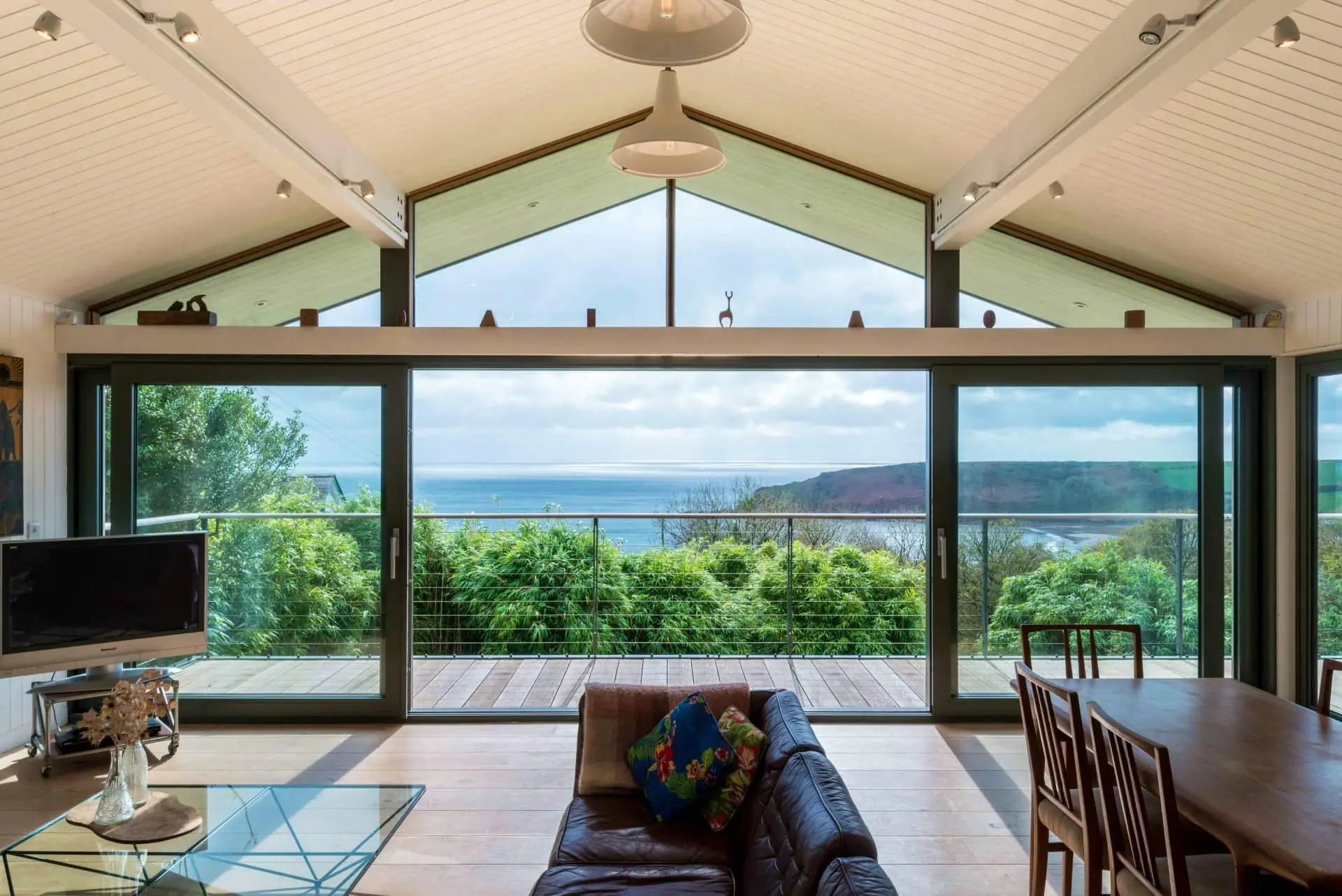
Pembrokeshire is expected to see approximately 94% coverage, just below the forecast for Cornwall. In nearby Cardiff, the partial eclipse begins at around 6.17pm and reaches its maximum at approximately 7.12pm, although precise timings vary by location.
Its coastal access and generous capacity suit families or groups. Its dog-friendly policy also suits travellers planning a longer break around the Pembrokeshire Coast, rather than an evening-only viewing trip.
Poppit Sands is recognised as a Dark Sky Discovery Site, while other west-facing sections of the coast may offer open views towards the setting Sun. Visitors should inspect their chosen position during daylight, paying attention to cliffs, buildings and the local tide.
Greenshutters sleeps 10, welcomes families and dogs, and is listed from £325 a night.
Exmoor View, Devon
Overlooking Exmoor National Park in Devon, Exmoor View is a handcrafted cabin for two, pairing broad countryside views with a private hot tub.
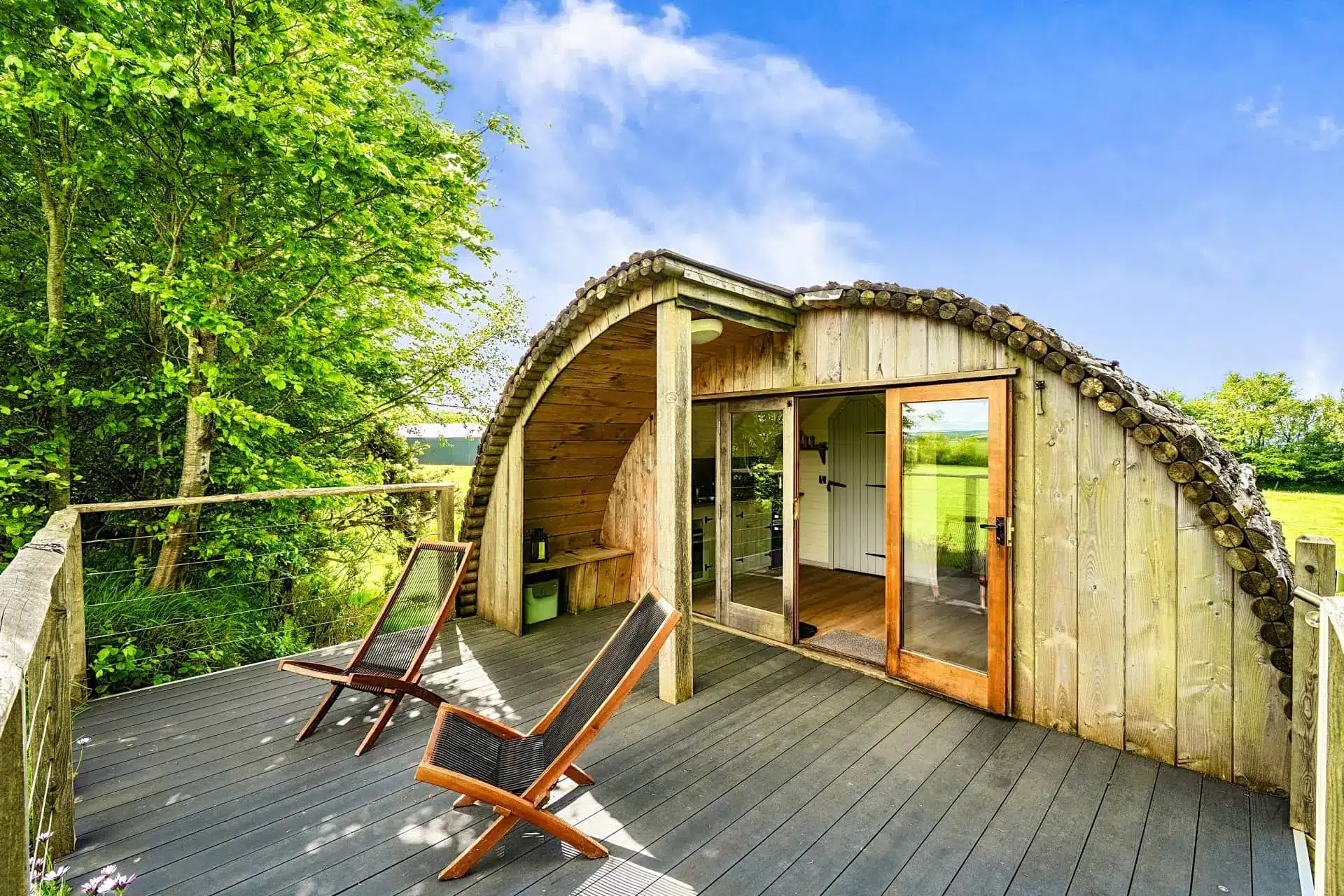
Exmoor’s south-westerly location and open terrain make it a useful base for the eclipse. The national park is also an established dark-sky destination, although darkness is not the main requirement for this early-evening event. An uninterrupted view towards the west will matter more as the Sun approaches the horizon.
The cabin offers a secluded setting for couples who would rather avoid a busy public viewpoint. Its outlook across the national park may help with visibility, but guests should confirm the exact orientation and check whether nearby hills interrupt the low western sky.
After maximum eclipse, the Sun and Moon will continue descending until the event ends shortly after 8pm. The hot tub offers a place to relax once safe solar viewing has finished.
Exmoor View sleeps two and is listed from £170 a night.
Domes by the Sea, near Galloway Forest Park
Positioned near Galloway Forest Park in south-west Scotland, Domes by the Sea offers stargazing domes with sea views and private hot tubs.
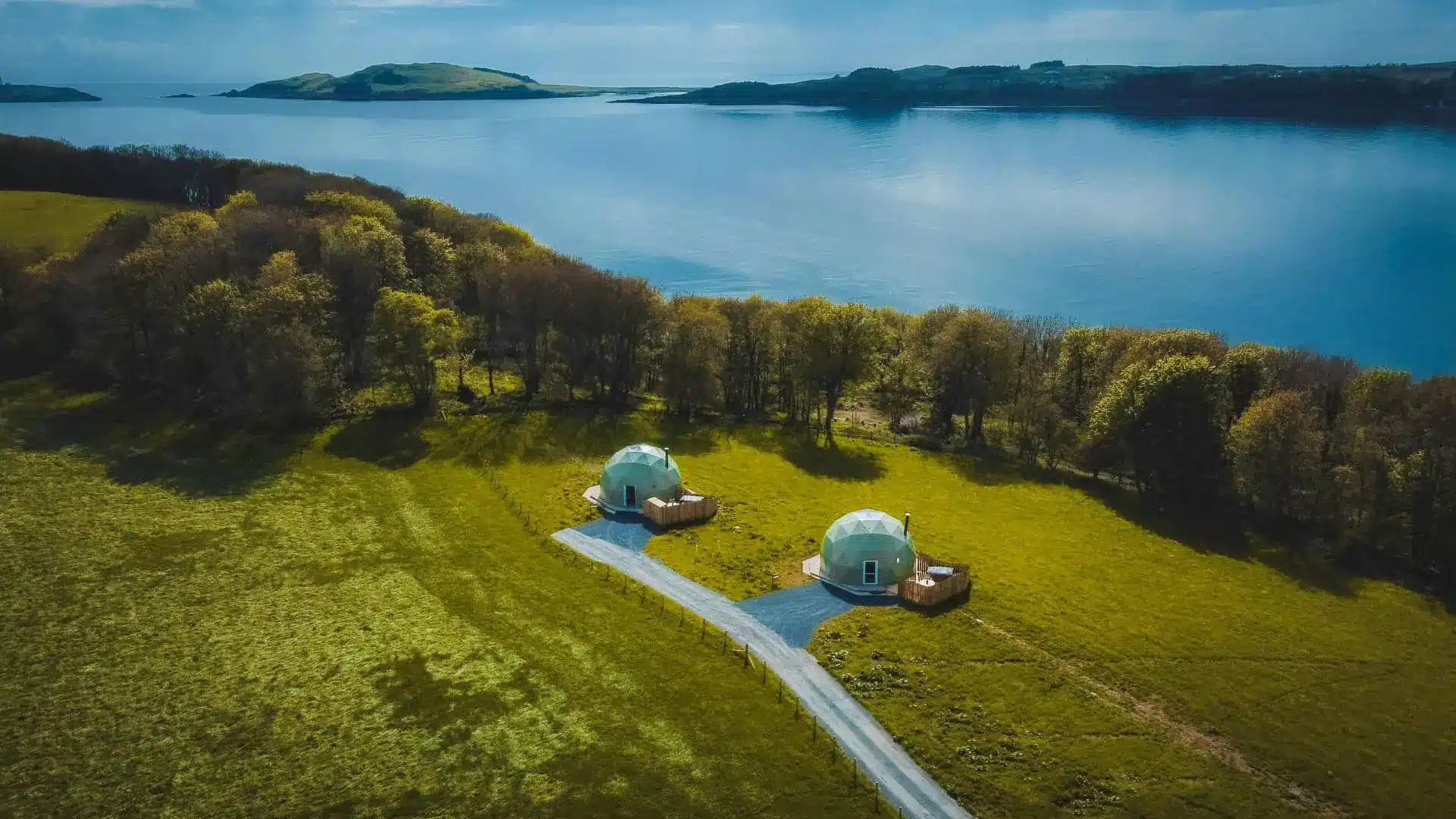
The eclipse will begin earlier in Scotland than in southern England. Edinburgh and Glasgow are expected to see first contact at about 6.08pm, maximum eclipse at approximately 7.05pm and the event ending around 8pm. Edinburgh is forecast to receive around 91% coverage.
Galloway Forest Park became Britain’s first Dark Sky Park and offers spacious views across lochs and upland terrain. While its dark skies are better known for night-time astronomy, the area’s rural setting and limited development may help visitors find a clear view of the western horizon.
Each dome sleeps two, making it well suited to couples. Dogs are welcome, and stays are listed from £175 a night.
The Retreat, Northumberland National Park
Located within Northumberland National Park, The Retreat at Cheviot Holiday Cottages is a romantic cottage for two with a hot tub and access to a swimming pool spa.
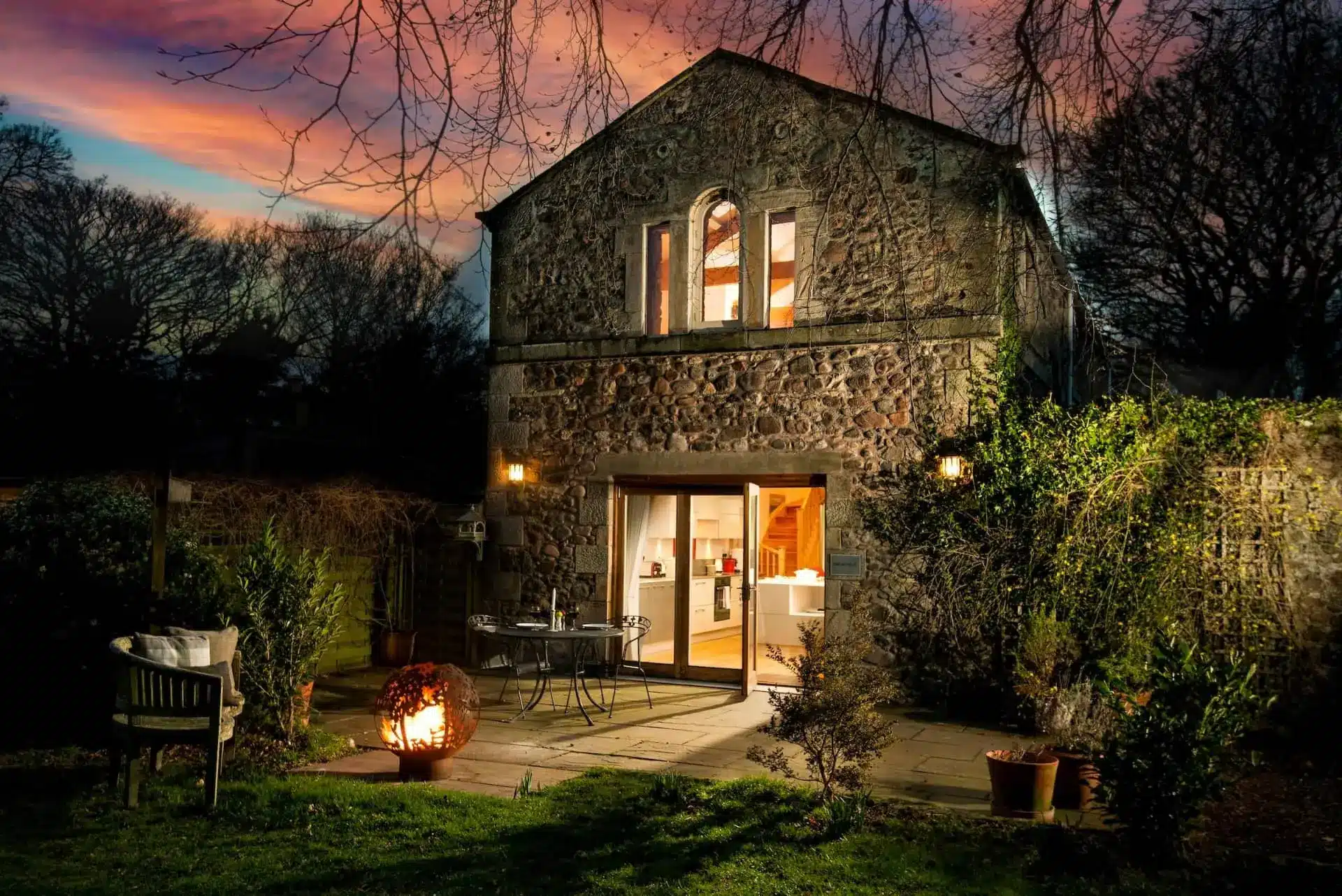
Northumberland National Park forms part of a major Dark Sky Reserve, with west-facing areas around Kielder Water among the region’s potential viewing locations. As elsewhere, a familiar stargazing spot will only work for this eclipse if it has an unobstructed view towards the low evening Sun.
The Retreat provides a comfortable rural base for travellers combining the event with walking and quiet time in the national park. Its private facilities also offer a calm alternative to gathering at a public viewpoint, although guests may still need to travel to find the most open horizon.
The cottage sleeps two and is listed from £1,950 a week.
Eclipse timings and London viewing spots
Royal Museums Greenwich forecasts around 90% coverage in London, 94% in Pembrokeshire and roughly 95% in Cornwall. The south-western tip of Ireland could see almost 97.5%.
London’s eclipse is expected to begin at approximately 6.17pm, reach maximum coverage shortly after 7.12pm and end around 8.06pm. Primrose Hill offers an elevated view across the capital, while Parliament Hill, Greenwich Park and the western side of Richmond Park are other potential locations with broad horizons.
The Royal Observatory Greenwich plans to livestream the eclipse from 6.10pm until 8pm. The broadcast will use an observatory telescope and will be hosted by astronomer Dr Greg Brown.
How to watch the partial eclipse safely
There will be no safe naked-eye viewing period anywhere in the UK because the Sun will never be completely covered. Clouds and ordinary sunglasses do not provide protection.
Viewers should use eclipse glasses or a handheld solar viewer meeting the ISO 12312-2 international safety standard for the entire event. Glasses should come from a reputable supplier and must be discarded if they are scratched, torn or otherwise damaged.
NASA’s eclipse safety guidance says cameras, telescopes, binoculars and other optical equipment require specialist solar filters attached to the front of the device. Looking through magnifying optics while wearing eclipse glasses can concentrate sunlight and cause severe eye injury.
A pinhole projector provides a simple indirect alternative. With the Sun behind the observer, a small hole in card can project its changing shape onto a second surface. The projected image is safe to watch, but nobody should look at the Sun through the pinhole itself.